St. Petersburg FL is easier to manage when venue access windows are checked before freight leaves storage.

Tampa / Florida
Venue-led trade show display planning for the bay-area event calendar.
info@tradeshowdisplaystampa.comStart the display briefLocations
Trade Show Display Coordination for ST Petersburg FL
Navigate Pinellas waterfront operational demands and cross-bay logistics as an extension of Tampa’s established convention infrastructure for smooth regional trade show execution.
St. Petersburg functions as a key secondary market within the Tampa Bay trade show ecosystem, drawing on the planning resources anchored in Hillsborough County while capitalizing on its distinct waterfront districts and venue characteristics. The Tampa Convention Center remains the regional scale leader with 600,000 square feet of meeting and event space that includes a 200,000-square-foot display hall configurable for up to 1,000 10x10 booths. Planners extending programs into St. Petersburg must address the specific load-in realities of waterfront access, bridge corridor timing, and integration with show elements routed from the Tampa core to maintain operational continuity across Pinellas and Hillsborough counties.
Florida’s right-to-work framework establishes an open-market labor baseline that supports flexible coordination, yet every venue and event carries its own service rules, utility provisions, and exhibitor-appointed contractor parameters that demand confirmation during initial planning stages. Visit Tampa Bay’s dedicated meeting planners hub supplies RFP support, facilities search tools, and mapping resources that encompass both the downtown Tampa convention district and complementary Pinellas waterfront sites. This regional approach enables precise alignment of ballroom-to-display transitions, material logistics, and attendee flow without assuming uniform conditions across districts.
District-level differentiation proves essential: downtown St. Petersburg’s cultural waterfront appeal contrasts with Westshore’s airport proximity, Ybor City’s entertainment density, or the fairgrounds corridor’s expansive outdoor and arena options. Effective coordination therefore prioritizes venue-specific workflows such as those outlined in the Florida State Fairgrounds event rentals process or the meetings sections of properties like the Vinoy, Saddlebrook Resort, and Opal Sands. By focusing on these operational nuances, planners achieve smoother execution when trade show activity spills beyond Tampa’s primary hubs into adjacent Gulf Coast markets.
- Tampa
- Locations
- Display Planning
- Show-Site Support
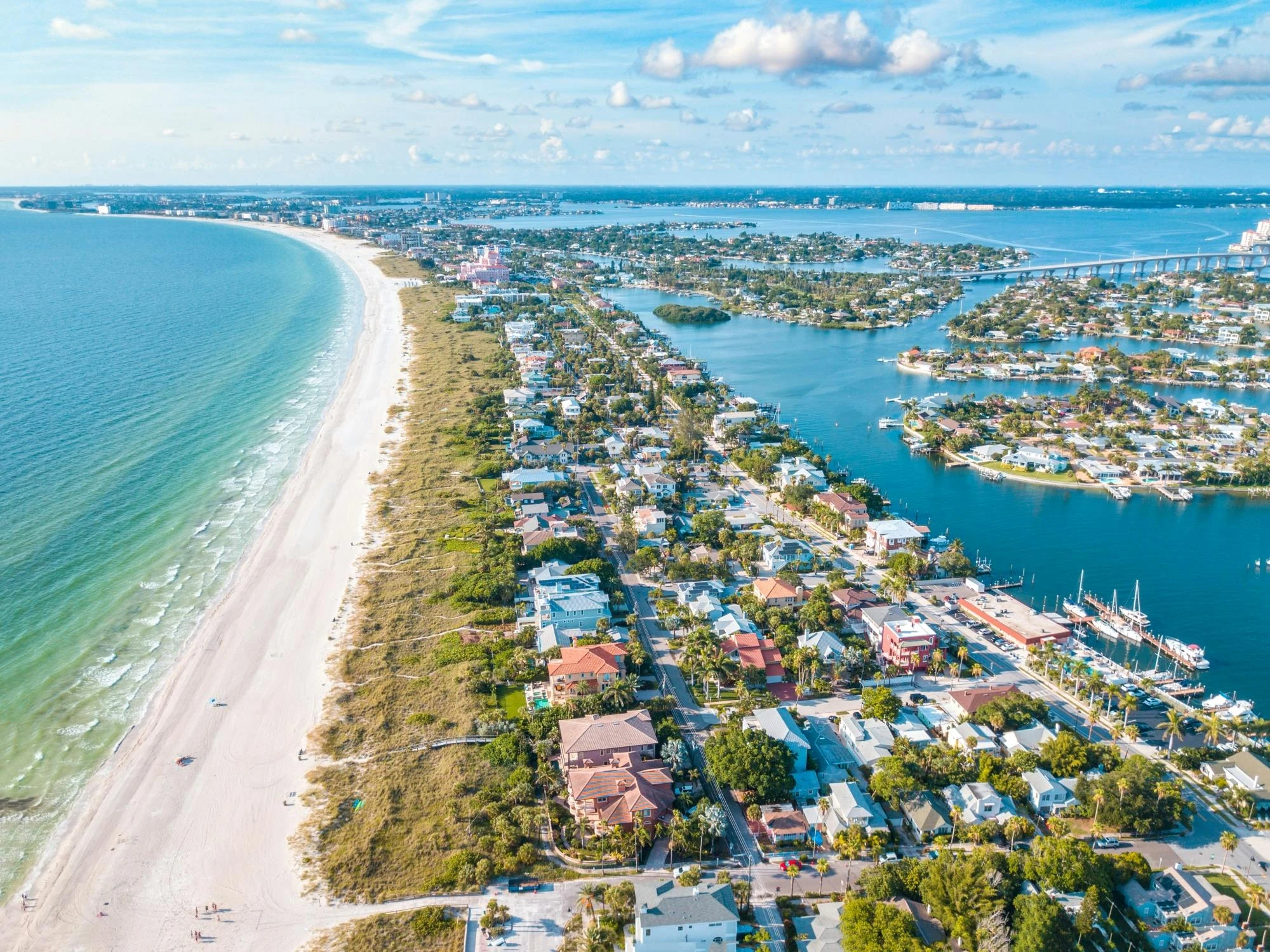
St. Petersburg FL reads more coherently when graphics, hardware, AV, and furniture are scoped together.
During Tampa show weeks, St. Petersburg FL often changes labor pacing, staging space, and the amount of floor support the booth needs.
Part
Core Planning Factors for St. Petersburg Events
Cross-bay logistics via I-275 corridor and bridge networks connecting Pinellas waterfront to Tampa infrastructure
Early confirmation of venue-managed utilities and services at waterfront and resort properties
Integration with Tampa Convention Center scale for hybrid or multi-venue regional programs
Application of Florida right-to-work labor principles with show-specific rule verification
Ballroom-to-display hall transitions and load-in realities at Pinellas venues
Utilization of Visit Tampa Bay planner hub resources including RFP and facilities search tools
District differentiation between downtown St. Petersburg waterfront and Hillsborough core areas
Part
St. Petersburg Position in the Tampa Bay Regional Trade Show Market
St. Petersburg extends the Tampa Bay meetings market by offering waterfront venues that complement the primary convention facilities concentrated in downtown Tampa, Water Street, and the Channel District. With demand often spilling from the Tampa Convention Center into Pinellas County, successful programs treat St. Petersburg not as an isolated destination but as an integrated component within broader regional campaigns. The connectivity provided by major corridors allows display materials and coordination efforts to flow efficiently between the 600,000-square-foot Tampa Convention Center and smaller-scale or specialized setups across the bay.
Planners benefit from viewing the area through the lens of county adjacency, where Hillsborough serves as the logistical anchor and Pinellas contributes distinctive ambiance and attendee draw. Nearby counties including Pasco, Polk, Manatee, and Sarasota further expand options, with resort inventory in Wesley Chapel and venues in Lakeland and Bradenton routing many requirements through Tampa-based planning. This structure supports comprehensive coverage without fragmenting operations, enabling coordinators to maintain consistency in booth logistics, material handling, and program timelines.
Operational detail centers on understanding how waterfront realities in St. Petersburg influence scheduling compared to inland or airport-proximate districts such as Westshore, Rocky Point, or the Florida State Fairgrounds corridor. By mapping these relationships early, exhibitors avoid bottlenecks in transport timing, labor handoffs, and utility setup that can arise when bridging multiple municipal and county jurisdictions within a single event.
Pinellas County waterfront as complementary to Tampa Convention Center anchor
I-275 and bridge systems as primary material routing corridors
Regional demand drivers extending to adjacent Gulf Coast counties
Hybrid programs combining downtown St. Petersburg with Hillsborough venues
Part
Venue Operational Profiles and Coordination Requirements
The Vinoy and similar Pinellas waterfront properties present meeting and event spaces that often incorporate display components within ballroom or pre-function configurations. Coordination requires alignment with each property’s specific planning workflows, including advance confirmation of load-in docks, utility access, and any house-service responsibilities. These details differ from the standardized infrastructure at the Tampa Convention Center, where electric, water, compressed-air hookups, show offices, and on-site cafes support large-scale displays of up to 1,000 booths.
The Florida State Fairgrounds offers a range of indoor and outdoor venues from 5,000 to 87,000 square feet, including Expo Hall, TECO Arena, and equestrian areas, each with dedicated event rental, catering, and FAQ pathways that guide planners through venue-managed processes. Saddlebrook Resort provides over 95,000 square feet of flexible space north of Tampa, while properties like Opal Sands and the RP Funding Center in Lakeland add further inventory that frequently integrates with St. Petersburg programs. Each location maintains distinct transition requirements between meeting rooms and display zones.
Successful display coordination therefore emphasizes early mapping of these profiles against show objectives. Planners should reference Visit Tampa Bay’s facilities search and the individual venue meetings sections to confirm parameters rather than assuming uniformity. This approach supports precise budgeting and scheduling for booth installation, dismantle, and any required shifts between St. Petersburg waterfront and Tampa core sites.
District nuances further refine execution: downtown St. Petersburg’s historic and cultural context influences attendee circulation patterns differently than the convention-oriented layout of Harbour Island or the business focus of Westshore. These factors affect everything from signage placement to material delivery windows and must be incorporated into the overall operational plan.
Part
Labor Coordination in Florida’s Open-Market Environment
Florida operates as a right-to-work state, establishing a constitutional principle that neither membership nor non-membership in a labor organization can be required as a condition of employment. This framework creates an open-market baseline for trade show labor rather than default venue-wide mandates. However, individual events and venues retain authority to set specific service rules, particularly around utilities, rigging, and floor management.
At the Tampa Convention Center, venue-side functions such as utility infrastructure and on-floor services require coordination with the show organizer and general service contractor. Similar verification processes apply when programs extend into St. Petersburg or other Pinellas locations, where house labor may handle certain elements while exhibitor-appointed contractors manage display-specific scopes. The absence of blanket union-only or non-union presumptions across reviewed properties like Saddlebrook, the Vinoy, and the fairgrounds reinforces the need for event-by-event confirmation.
Planners and exhibitors should engage these details during the RFP and contracting phase to avoid downstream conflicts. This includes reviewing exhibitor manuals, clarifying responsibilities for booth installation and dismantle, and ensuring all parties understand show-specific labor boundaries. Such diligence supports compliance while preserving the flexibility inherent in the state’s labor environment.
Regional consistency emerges when coordinators apply the same verification discipline across Tampa Bay districts. Whether managing a program centered in downtown St. Petersburg or one spanning to the Seminole Hard Rock or Straz Center in Tampa, early labor alignment remains the operational constant that protects timelines and budgets.
Confirm venue and organizer labor rules at initial planning stages
Distinguish between house services and exhibitor-appointed contractor scopes
Reference exhibitor manuals for each unique event and location
Maintain communication across general service contractor and venue teams
Part
Logistics, Load-In, and Waterfront Operational Details
Waterfront venues in St. Petersburg introduce load-in considerations tied to dock availability, tidal influences, bridge height restrictions, and traffic patterns along the I-275 corridor. These realities contrast with the drive-up accessibility at the Florida State Fairgrounds or the airport-adjacent advantages of Westshore and Rocky Point properties. Coordinators must therefore build realistic buffers into schedules when routing materials from Tampa staging points to Pinellas sites.
Booth logistics gain added complexity in multi-venue campaigns that combine the Tampa Convention Center’s expansive display floor with more intimate ballroom or pre-function displays in St. Petersburg. Transitions require precise sequencing of dismantle, transport, and reinstallation to minimize downtime and protect display assets. Planning documents should explicitly address these handoffs rather than treating them as secondary concerns.
Additional operational factors include alignment with catering and utility workflows at each property. The fairgrounds navigation through Event Rentals, Venues, and Catering sections illustrates the structured pathways common across the region. When applied to St. Petersburg programs, this structured approach helps maintain consistency even as district characteristics change.
Effective coordinators treat these logistics as central to program success, mapping every movement against venue-specific constraints and broader regional traffic patterns. The result is reduced risk of delays that could otherwise compromise the attendee experience or exhibitor objectives.
Account for bridge and waterfront access timing restrictions
Sequence dismantle-transport-reinstall for multi-venue programs
Align material routing with Tampa hub staging capabilities
Incorporate utility and catering confirmation into master timelines
Part
Leveraging Planner Resources for Regional Coverage
Visit Tampa Bay maintains a dedicated meeting planners hub that aggregates convention-center specifications, facilities search functionality, maps, and RFP mechanisms covering the entire Tampa Bay area. These resources prove particularly valuable when developing programs that span St. Petersburg waterfront districts and the primary Tampa convention core. Planners can identify suitable venues, request proposals, and access supporting service information through a single entry point rather than navigating disparate municipal channels.
The Tampa Convention Center documentation within these resources highlights its 200,000-square-foot display capability alongside meeting rooms, cafes, and show offices. When layered with details from the Vinoy meetings section, Saddlebrook’s 95,000-square-foot inventory, or the Florida State Fairgrounds venue range, coordinators gain a comprehensive picture of options available across Pinellas and Hillsborough counties. This breadth supports data-driven decisions on venue selection and program scale.
RFP processes should explicitly request clarification on labor parameters, load-in windows, utility responsibilities, and any exhibitor-appointed contractor guidelines. By documenting these elements upfront, subsequent coordination becomes more predictable and less prone to last-minute revisions. The planner hub also supplies mapping that aids in visualizing attendee movement and shuttle requirements between districts.
Ultimately, these centralized resources reinforce the value of treating Tampa as the operational nerve center even when events incorporate substantial St. Petersburg components. The approach yields tighter integration, clearer accountability, and more professional execution across the diverse Tampa Bay marketplace.
Part
District Differentiation and Multi-Venue Strategy Development
Downtown St. Petersburg’s waterfront orientation and historic character create a distinctly different operational environment than the convention density of Water Street Tampa, the business focus of Westshore, or the mixed-use vibrancy of Ybor City. These differences manifest in parking logistics, attendee arrival patterns, preferred display footprints, and even the types of ancillary events that pair naturally with trade show activity. Coordinators who internalize these distinctions craft more resonant and logistically sound programs.
South Tampa districts such as Hyde Park, SoHo, and Davis Islands add further layers of nuance for smaller receptions or hospitality functions that may support larger displays housed at the convention center or in St. Petersburg. Meanwhile, suburban and northern markets including Wesley Chapel, Lutz, Oldsmar, Safety Harbor, Clearwater Beach, Largo, and Pinellas Park expand inventory options while maintaining routing through the Tampa hub. Understanding the full spectrum prevents planners from defaulting to generic approaches that ignore local operational texture.
Multi-venue strategies succeed when designed around clear master timelines that account for all district variables. This includes synchronized labor calls, sequenced material movements, unified exhibitor communications, and contingency planning for weather or traffic disruptions that may affect waterfront versus inland sites differently. The resulting program maintains coherence even as it draws on the strengths of multiple locations.
By emphasizing these operational and district-level details over generic destination promotion, coordinators position themselves to deliver measurable improvements in efficiency, compliance, and exhibitor satisfaction throughout the Tampa Bay region.
Waterfront versus airport-district load-in and circulation patterns
Historic resort ambiance at the Vinoy versus convention-center scale
Integration opportunities with Seminole Hard Rock and Straz Center programming
Suburban and Gulf Coast expansion into Pasco, Manatee, and Sarasota counties
Part
Timeline and Risk Mitigation Best Practices
Effective St. Petersburg coordination begins at least twelve to eighteen months prior to move-in for programs that interface with the Tampa Convention Center or other large-scale venues. This lead time accommodates RFP cycles, labor and service clarifications, site visits where permitted, and the development of detailed exhibitor manuals that reflect the unique requirements of each participating district. Shorter timelines increase the probability of overlooked parameters that surface only during final walk-throughs.
Risk mitigation centers on three pillars: documented confirmation of all venue rules, redundant communication channels with show organizers and contractors, and contingency buffers for cross-bay transport. Regular milestone reviews ensure that changes in display counts, labor scopes, or utility needs are propagated across every location involved in the program. This disciplined process has proven effective for both single-district St. Petersburg events and complex campaigns that also incorporate Saddlebrook, the fairgrounds, or downtown Tampa.
Post-event debriefs further refine future planning by capturing lessons around load-in efficiency, labor coordination outcomes, and attendee flow between districts. Over time these insights compound, allowing coordinators to anticipate recurring operational patterns unique to the Tampa Bay market and the Pinellas waterfront in particular.
Part
Frequently Asked Questions About St. Petersburg Trade Show Coordination
Q: Is Florida a right-to-work state and how does it affect trade shows?
Yes, Florida is a right-to-work state under its constitution, which supports an open-market labor environment rather than default union mandates. Final labor conditions for any St. Petersburg or Tampa event still depend on the specific venue, exhibitor manual, service contractor, and show organizer requirements, making early confirmation essential.
Q: What is the scale of the Tampa Convention Center?
The Tampa Convention Center offers 600,000 square feet of meeting and event space, including a 200,000-square-foot display hall that can accommodate up to 1,000 10x10 booths along with utility infrastructure, show offices, and on-site food service. This scale often anchors regional programs that extend into St. Petersburg.
Q: How should planners approach waterfront load-in in St. Petersburg?
Waterfront venues require attention to dock access, bridge clearances, and I-275 corridor timing that differ from inland or airport-proximate locations. Coordination routed through Tampa planning resources helps sequence material movement, labor calls, and transitions while maintaining buffers for these operational realities.
Q: Which resources help identify venues across the Tampa Bay area?
Visit Tampa Bay’s meeting planners hub supplies facilities search, maps, convention-center details, and RFP support that cover both Tampa and Pinellas County options including the Vinoy, Saddlebrook Resort, Florida State Fairgrounds, and additional Gulf Coast properties.
Q: Why coordinate St. Petersburg events through Tampa-based planning?
Tampa functions as the central logistics and convention hub for the broader Tampa Bay region. This enables consistent application of labor verification, utility coordination, and display logistics across districts while leveraging established resources that serve both Hillsborough and Pinellas counties.
Q: What are the primary operational differences between Tampa Bay districts?
Downtown St. Petersburg emphasizes waterfront access and historic character, while downtown Tampa and the convention center focus on large-scale display capacity. Westshore offers airport proximity, the fairgrounds corridor provides arena and outdoor flexibility, and each district carries distinct load-in, labor, and attendee-flow implications that must be addressed individually.