Led Video Wall Integration is easier to manage when venue access windows are checked before freight leaves storage.

Tampa / Florida
Venue-led trade show display planning for the bay-area event calendar.
info@tradeshowdisplaystampa.comStart the display briefServices
Led Video Wall Integration
Led Video Wall Integration sits close to one coordinated rental scope in Tampa. Convention halls, waterfront hotels, sponsor environments, and regional expo dates all push the booth in different ways, so Led Video Wall Integration changes how the room, the schedule, and the sales rhythm line up once the event becomes real.
Read that way, Led Video Wall Integration influences graphics, counters, demo surfaces, lighting, and meeting areas just as much as it influences delivery, material handling, install, supervision, dismantle, and return shipping. That is usually where exhibitors feel the difference between a booth that merely occupies space and one that is genuinely ready to work.
- Tampa
- Services
- Display Planning
- Show-Site Support
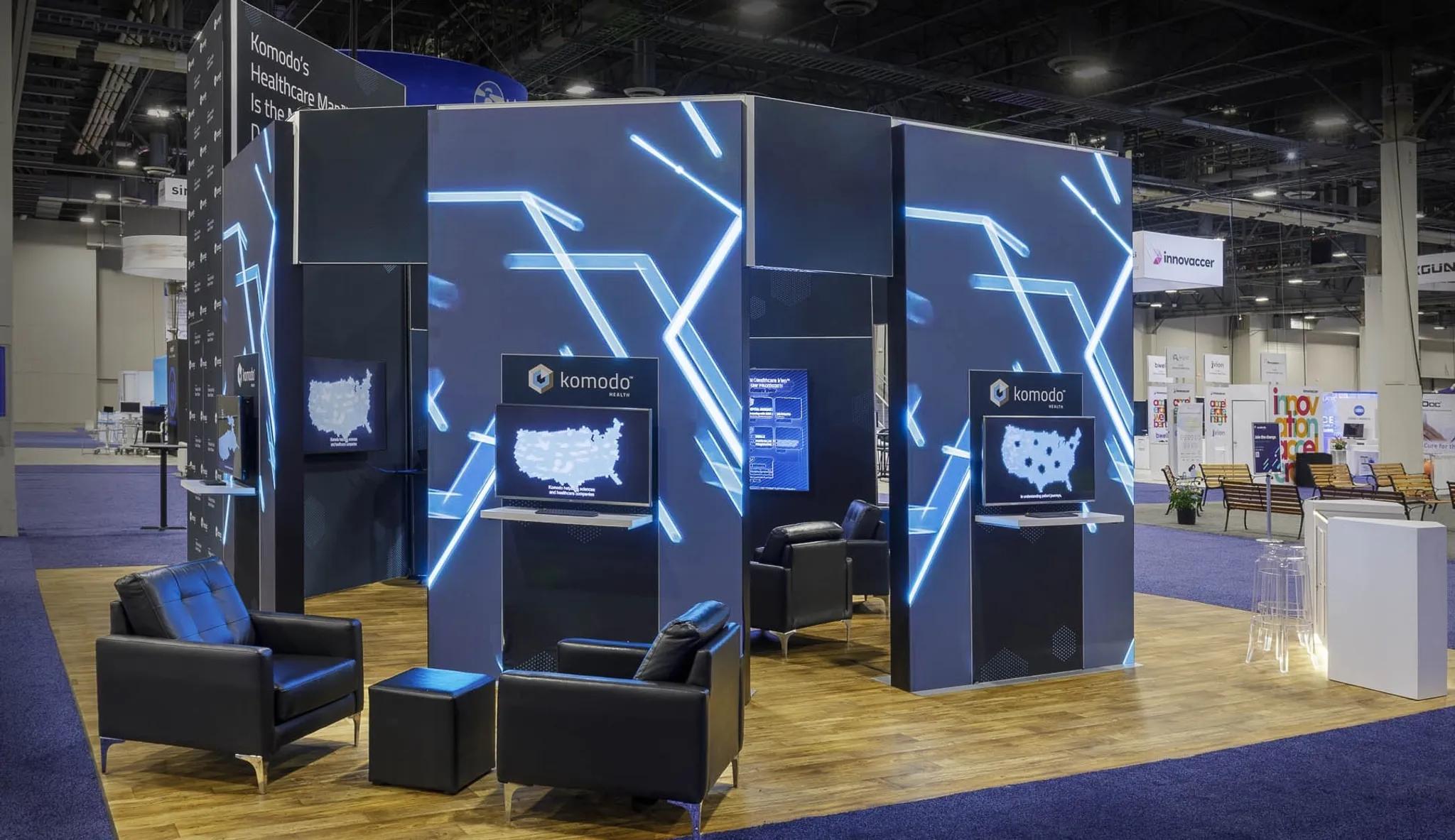
Led Video Wall Integration reads more coherently when graphics, hardware, AV, and furniture are scoped together.
During Tampa show weeks, Led Video Wall Integration often changes labor pacing, staging space, and the amount of floor support the booth needs.
Part
Led Video Wall Integration on the Tampa show floor
Led Video Wall Integration becomes real the moment the room opens and the booth has to do the job it was rented to do. Some Tampa exhibitors need fast aisle pull and quick qualification. Others need room for deeper product explanation, calmer meetings, or a display that can carry a more technical conversation without feeling crowded. Led Video Wall Integration changes which of those moments the booth is built to support, and that decision leaves a mark on everything from graphic hierarchy to how visitors enter the space.
That is why Led Video Wall Integration belongs in the earliest scope conversations. Once the exhibitor is clear on how the booth must perform, it becomes easier to decide how visible the message needs to be from distance, what belongs near the front edge, and how much of the brand story should live in graphics versus staff interaction. The cleaner those choices are, the less often the rental scope drifts toward pieces that look useful on paper but do very little once the event is busy.
- Led Video Wall Integration matters most when it is settled before graphics, labor, and freight are being finalized.
- In Tampa, Led Video Wall Integration usually changes labor timing, storage choices, and how much show-site supervision the booth needs.
- The Westshore Grand A Tribute Portfolio Hotel offers a useful second angle when the team wants another view on a cleaner budget and a booth team that is not chasing missing parts during show week.
Part
How the booth needs to behave
Once Led Video Wall Integration is in view, the booth format starts to settle into place. Visibility, storage, conversation zones, demo surfaces, counters, and circulation all have to work together. Tampa exhibitors usually feel this most when they start placing product tables, monitors, hospitality, and hidden storage in the same footprint. A layout that looks generous in theory can feel surprisingly cramped once every practical element is accounted for.
Format also changes the crew experience. Larger lightboxes, hanging signs, custom counters, and multi-zone footprints demand a different install sequence than a smaller modular setup or a repeatable conference package. That shift affects power planning, staging, freight, and how long the booth stays composed once attendees begin leaning on counters, moving chairs, or asking staff to demonstrate something in the middle of live traffic.
Part
Graphics, demos, and message clarity
Graphics around Led Video Wall Integration work best when each surface has a clear job. The backdrop catches the room. The counter reinforces the pitch. The monitor supports proof. Smaller panels explain what a visitor cannot absorb in two seconds while walking the aisle. When those jobs are blurred together, the booth often ends up saying too much at once and the message loses force even though plenty of material was produced.
Tampa schedules make that clarity even more valuable because print deadlines, replacement graphics, lighting checks, and final approvals often stack against freight timing. A tighter graphics plan keeps graphics, counters, demo surfaces, lighting, and meeting areas connected to the real operating plan, which is what allows the finished environment to look deliberate instead of pieced together from good intentions and late revisions.
Part
Freight, access, and crew timing
Led Video Wall Integration also reaches into the part of the job that never appears in a hero render: the warehouse deadlines, carrier calls, marshaling rules, loading docks, and the order in which pieces need to hit the floor. Those decisions shape how calm or chaotic move-in feels in Tampa. A booth with too many loose elements, mismatched packing, or poorly grouped electrical and AV parts can lose time before the first structure is even standing.
That is why freight planning is usually read backward from the moment the booth needs to be fully camera-ready. Graphics finishing, quality checks, crate order, direct-to-show shipments, advance warehouse timing, and labor call lengths all have to support the same sequence. When they do, the crew uses the final hour for styling and testing instead of hunting through cases or correcting avoidable packing mistakes.
Part
What exhibitors notice during live hours
During the event, exhibitors feel Led Video Wall Integration in smaller ways that matter. They feel it in whether meetings can happen without blocking the aisle, whether samples and literature stay easy to reach, whether cables and backup stock stay hidden, and whether the booth still looks cared for after hours of use. These details rarely announce themselves when they are handled well. They simply make the booth seem calmer, clearer, and easier to work.
The same is true of labor planning. A stronger booth lead, a cleaner reset routine, and a crew sequence that reflects the actual build complexity all protect the selling day. Tampa events run long, and even attractive exhibits can start looking tired if there is no plan for upkeep, quick corrections, or how the staff will recover the space after each traffic wave.
Part
Why Led Video Wall Integration still matters after the doors close
Led Video Wall Integration still matters after the event because it affects what can be reused, what needs to be refreshed, and how expensive the next date becomes. Smart rental programs keep the strongest pieces in play while letting the exhibitor change graphics, merchandising, or supporting hardware as the room and audience shift. That is usually where cost discipline and quality control stop competing with each other and start working together.
It is also why comparing Backlit Display Lightboxes, Led Video Wall Integration, Trade Show AV And Lighting, and The Westshore Grand A Tribute Portfolio Hotel can be so useful when a Tampa assignment is still taking shape. Each section throws a different light on the same booth: the room, the format, the workload, or the audience. The clearest rental decision usually comes from seeing where those views overlap. That is the path that most often leads to a cleaner budget and a booth team that is not chasing missing parts during show week.
Part
What drives the Tampa calendar
Tampa runs one of the busiest trade show calendars in the region. Convention weeks stack close together, hotel blocks compete for the same nights, and the venues themselves shape what is possible on the floor.
Exhibitors pulling back on budget in Tampa still have to show up in the same booth neighborhoods as their competitors. Scope gets tighter; standards don't. The booths that land well are the ones built on a specific plan, not a standard layouts.
Tampa Convention Center as a 600,000-square-foot waterfront facility, giving the market a true convention anchor rather than only hotel meeting inventory.
113,682 square feet of event space at Tampa Marriott Water Street, while JW Marriott Tampa Water Street markets itself as a major meeting destination in the same district with a 100,000-square-foot meeting-and-event profile in its planner guide, which sets the practical ceiling for a booth program working the market.
Part
The buildings that host Tampa events
Different Tampa venues mean different floor plans, different labor rules, and different freight realities.
A venue walk — either in person or via the published floor plan — is the step that reveals constraints no spec sheet shows. Column spacing, real ceiling height at the grid point, and dock access shape what's actually buildable.
Tampa Airport Marriott: tampa Airport Marriott in Tampa International Airport with 22,000 square feet of meeting space, a largest room of 7,446 square feet, 17 meeting rooms, 298 guestrooms.
Grand Hyatt Tampa Bay. Grand Hyatt Tampa Bay in Rocky Point / Airport with 28,000 square feet of meeting space, a largest room of 10,370 square feet, 22 meeting rooms, 444 guestrooms.
The Tampa EDITION is one of the anchors. The Tampa EDITION in Channel District / Water Street with 28,026 square feet of meeting space, a largest room of 3,257 square feet, 21 meeting rooms, 172 guestrooms.
Part
How we're built to run your project
Trade Show Displays of Tampa keeps the work local. Design, build, and install share the same team and the same playbook, which is how quality survives across a show week.
Working with a Tampa-based shop matters most when something goes wrong on-site. Solutions live within driving distance instead of on another coast.
Consistency across show dates is the other reason to hire local. The same crew that built the booth runs the install, knows the pack-out, and catches the small things — a missing hardware pack, a graphic edge that needs reseating, a storage crate routed to the wrong bay — without needing the client team to intervene.
Part
How Tampa floor operations work
Labor in Tampa runs venue-by-venue, not citywide. Each building publishes its own rules for who handles what on the floor.
Practically, that means pulling the current exhibitor manual for every show and confirming a handful of items in writing: which tasks the venue's house crews cover, which tasks the show's general contractor covers, and what an exhibitor or their appointed contractor can handle without escalation.
Prevailing labor rates may apply. It also states Edlen must refuse connections when exhibitor or exhibitor-appointed-contractor wiring is not compliant with code or properly secured.
Part
Where Tampa shows cluster
The Bay-to-Beach Spillover area runs through St. Petersburg, Clearwater, Clearwater Beach, Safety Harbor. Relevant for coastal meetings, hospitality-heavy programs, and clients who still rely on Tampa for exhibit execution through the broader trade-show market.
I-4 East Spillover runs across Plant City, Lakeland. Extends the service map toward Polk County where large regional events and convention-style programs still intersect with Tampa vendor access.
Part
Line items on a typical project
Project scope usually spans design, fabrication, graphics, AV, labor coordination, freight, install, show-hours support, and strike.
Typical line items include booth structure (custom or rental), graphics and print, AV and lighting, show-service orders (power, internet, rigging), labor calls against the venue's rules, freight both ways, on-site supervision, and post-show closeout documentation.
The handoffs on a led video wall integration project matter almost as much as the line items. Design has to hand a build-ready drawing to fabrication. Fabrication has to hand a pre-built, dry-fitted booth to crating. The crater has to hand a labeled, manifested shipment to the carrier. Every handoff is a place quality can drop.
For programs that repeat, asset management becomes part of the engagement — storage, graphic rotation, refurbishment, and re-crating are planned rather than one-off.
A clean scope definition also calls out what isn't included: show organizer fees, client staff travel, and anything the client already has under contract (lead capture platforms, CRM integrations, promotional giveaways). Those run alongside the engagement rather than inside it.
Part
How a project runs
Every engagement begins the same way. The venue, the show dates, the footprint, and the target outcome go on the table first. From those four inputs, a real plan can be built.
After the brief, the work turns to the building itself. Dock windows, utility orders, rigging approvals, and labor calls are all confirmed in writing before anything goes to fabrication.
Production covers fabrication, graphics, AV spec, rentals, and crew chief assignment. It is the longest phase of most projects and the one where timelines are either protected or lost.
Install days are owned by a single show floor lead. That person carries the plan, works the punch list in real time, and reports up once a day with real status.
Throughout show hours, the show floor lead stays present. Tech breaks, sponsor changes, venue requests — all handled without pulling the client team off the floor.
Strike and closeout happen the same day. Storage labels, outbound manifests, vendor performance notes, and a written debrief go out within 24 hours of doors closing.
Part
What it costs and how fast it moves
Every project has the same cost drivers. The number depends on scope, and scope depends on a handful of specific variables.
Six variables drive the cost: custom versus rental, booth footprint and complexity, venue-specific labor and rigging fees, graphics scope and substrate, freight distance and timing, and the number of on-site supervision days.
Lead time drives everything. Custom: 16 to 20 weeks. Rental: 8 to 12. Under 4 weeks is possible but narrows choices and raises cost.
Part
What a successful project looks like
The measure of a good engagement is simple: on-time install, no venue callouts, clean show hours, and a closeout that makes the next event easier to book.
Most programs in Tampa are evaluated on lead-capture volume, meetings booked on the floor, and qualified-pipeline attribution after the show. The booth is a means to those numbers — it is not the number itself.
A week after the show, the booth's actual floor performance is already clearer than any pre-show projection. We document those observations alongside the technical closeout so the next cycle inherits real signal, not nostalgia.
Part
Led Video Wall Integration planning questions
Q: Do you work at Tampa Airport Marriott?
Yes. Tampa Airport Marriott in Tampa International Airport with 22,000 square feet of meeting space, a largest room of 7,446 square feet, 17 meeting rooms, 298 guestrooms. It is relevant for conferences, exhibitor meetings, sponsor hospitality, and off-floor event programs tied to Tampa shows. Projects at that building are planned against its specific floor rules.
Q: How does labor work in Tampa?
It runs venue by venue. Prevailing labor rates may apply. It also states Edlen must refuse connections when exhibitor or exhibitor-appointed-contractor wiring is not compliant with code or properly secured. Other Tampa venues have their own published rules, and the plan matches the specific building.
Q: How much lead time is ideal?
Custom builds run best with 16 to 20 weeks of lead time. Rentals take 8 to 12 weeks. Work inside 4 weeks is possible but raises costs and narrows the options.
Q: What information kicks off a project?
The show, the venue, the booth number, the dates, and a target budget range. From those, an initial scope and a realistic cost come back within a few days.
Q: Who runs the booth on-site?
One named show-site lead runs the install, the show hours, and the strike. That person carries the floor plan and the punch list from crates to doors and reports up once a day.
Q: Can the booth travel to the next city on our calendar?
Yes — builds are designed for modular reuse unless single-use scenic is specifically required. Same structure, swappable graphics, standard crates. Tampa programs that roll to another city on the same calendar get handled end to end.
Q: What happens if something breaks during show hours?
The show floor lead handles it. Minor repairs happen in place; anything larger gets sourced from the local fabricators or rerouted through the venue's service desk.